
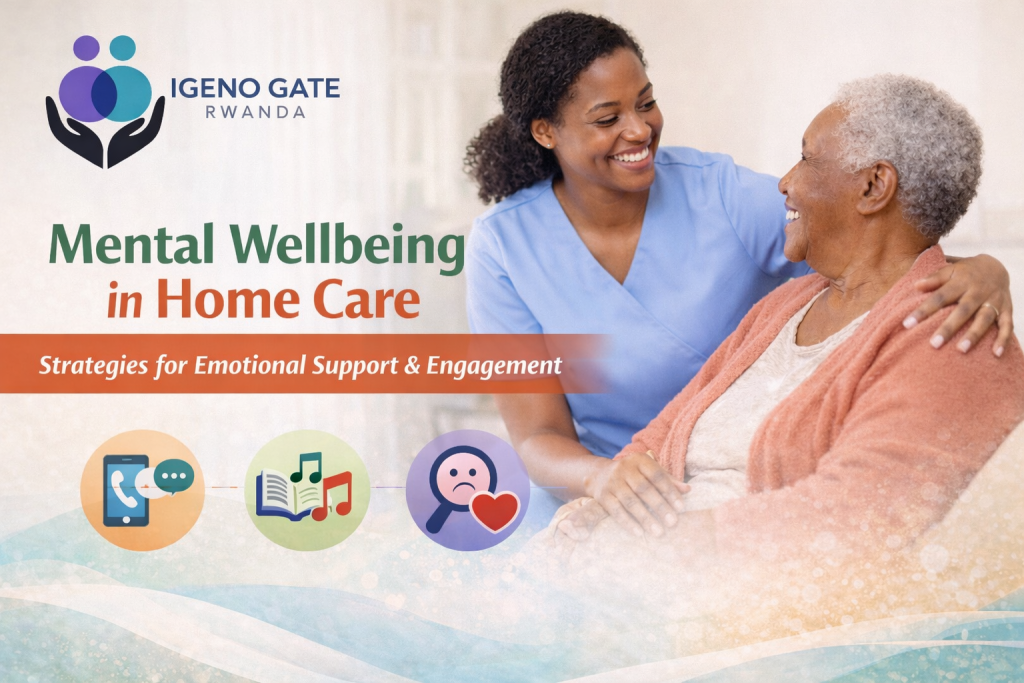
When we think of home care, physical recovery often takes the spotlight — administering medications, monitoring vital signs, and assisting with mobility. But true wellness goes beyond the body. Mental and emotional wellbeing are just as critical to recovery and quality of life, particularly for seniors and individuals living with chronic conditions. At Igeno Gate Rwanda, we believe caregiving should nurture both physical and emotional health.
Why Emotional Support Matters
Emotional wellbeing directly affects physical recovery. Stress, anxiety, and social isolation can slow healing, increase the risk of depression, and even impact immune function. Home care is not just about completing tasks; it’s about creating an environment where patients feel safe, connected, and engaged.
Strategies for Supporting Mental Wellbeing
-
Structured Social Interaction
-
Schedule daily check-ins with family members, friends, or volunteers via phone or video calls.
-
Encourage conversation during routine care activities — even small talks while preparing meals or assisting with exercises can strengthen emotional bonds.
-
-
Activities Tailored to Interests
-
Engage patients in hobbies or activities they enjoy, such as reading, puzzles, music, or gardening.
-
Personalize activities based on their cognitive and physical abilities to maintain a sense of independence and purpose.
-
-
Stress Reduction Techniques
-
Introduce relaxation exercises like deep breathing, guided meditation, or gentle stretching.
-
Create calming spaces at home with soft lighting, music, or sensory elements to help reduce anxiety.
-
-
Early Recognition of Anxiety or Depression
-
Caregivers should be trained to notice changes in mood, sleep patterns, or appetite.
-
Promptly communicate any concerns to family members or healthcare professionals to prevent escalation.
-
-
Fostering a Positive Emotional Environment
-
Families play a crucial role: maintain open communication, express empathy, and celebrate small achievements.
-
Encourage social participation whenever possible — even simple visits or outdoor walks can lift spirits and reduce feelings of isolation.
-
The Role of Caregivers and Families
Effective mental wellbeing support is a partnership. Professional caregivers provide structured engagement and monitor emotional health, while families offer familiarity, love, and reassurance. By working together, caregivers and families create an emotionally nurturing home environment that promotes both recovery and a higher quality of life.
Final Thoughts
Mental wellbeing is an essential component of holistic home care. At Igeno Gate Rwanda, our approach integrates emotional support, meaningful activities, and attentive monitoring alongside traditional caregiving. By prioritizing mental health, we help patients not only recover physically but thrive emotionally.
Contact us today to learn how our professional caregiving programs can support both the body and mind of your loved ones.
References
-
World Health Organization. (2017). Mental health of older adults. WHO.
https://www.who.int/news-room/fact-sheets/detail/mental-health-of-older-adults -
National Institute on Aging. (2022). Caring for a Person with Alzheimer’s Disease: Your Role as a Caregiver. NIH.
https://www.nia.nih.gov/health/caregiving -
Cohen-Mansfield, J., Shmotkin, D., & Hazan, H. (2019). The Importance of Social Engagement in Older Adults’ Mental Health. Aging & Mental Health, 23(8), 1039–1047.
https://doi.org/10.1080/13607863.2018.1464416 -
Alzheimer’s Association. (2021). Activities for Dementia: How to Engage Your Loved One at Home.
https://www.alz.org/help-support/caregiving/daily-care/activities -
National Alliance on Mental Illness (NAMI). (2020). Caregiving and Mental Health: Supporting Emotional Wellbeing.
https://www.nami.org/Your-Journey/Family-Members-and-Caregivers -
Pinquart, M., & Sörensen, S. (2007). Associations of Stressors and Uplifts of Caregiving with Caregiver Burden and Depressive Mood: A Meta-Analysis. Journals of Gerontology, Series B, 62B(2), P112–P128.
https://doi.org/10.1093/geronb/62.2.P112 -
Gitlin, L. N., & Hodgson, N. (2015). Caregivers as Therapeutic Agents in Home-Based Care. Journal of Aging and Health, 27(1), 14–29.
https://doi.org/10.1177/0898264314551175