
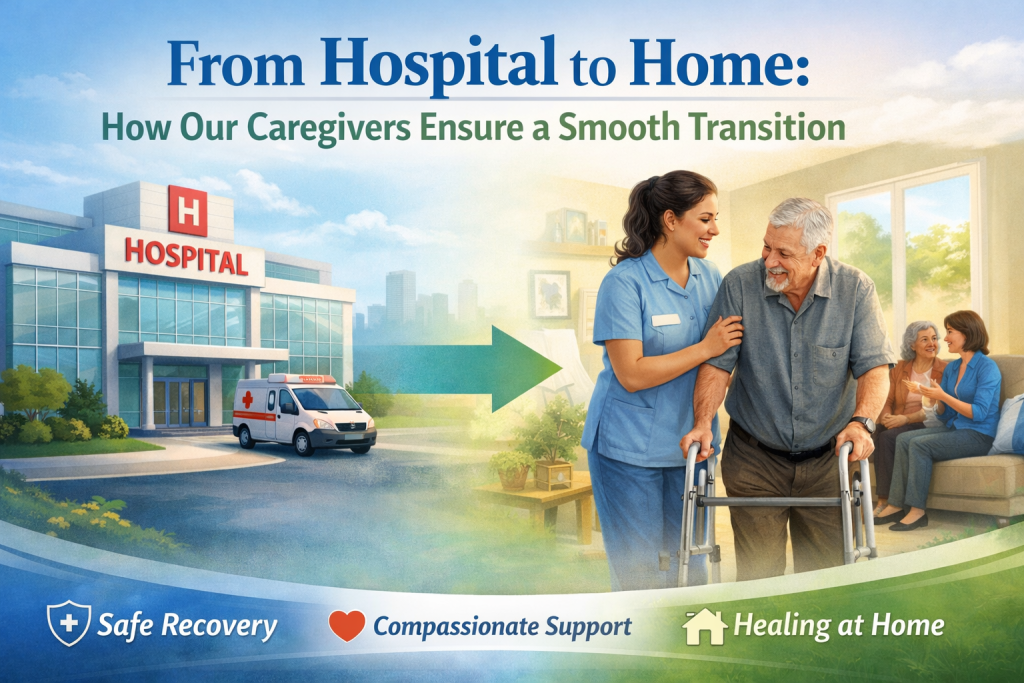
The moment a patient is discharged from hospital is often perceived as the end of a health crisis. In reality, it marks the beginning of a critical recovery phase. The transition from hospital to home can be medically, physically, and emotionally demanding—for patients and families alike. Without proper support, this period carries a high risk of complications, readmission, delayed healing, and emotional distress.
Professional caregivers play a vital role in bridging the gap between hospital care and full recovery at home. Their presence ensures continuity of care, safety, and holistic healing in a familiar environment.
The Risks of an Unplanned Transition Home
When patients return home without structured support, families may face several challenges:
-
Medication errors due to complex prescriptions
-
Poor wound or post-operative care
-
Missed follow-up instructions
-
Reduced mobility leading to falls or pressure injuries
-
Anxiety, depression, or confusion—especially in older adults
-
Caregiver burnout among family members
A smooth transition requires more than goodwill; it requires trained, coordinated, and patient-centered care.
How Professional Caregivers Support Safe Home Recovery
1. Continuity of Clinical Care
Caregivers ensure that hospital discharge instructions are accurately followed. This includes monitoring vital signs, supporting medication adherence, observing warning signs, and maintaining clear communication with healthcare providers when concerns arise.
This continuity significantly reduces preventable complications and unnecessary hospital readmissions.
2. Medication Management and Safety
After discharge, many patients are prescribed new or adjusted medications. Caregivers assist by:
-
Organizing medication schedules
-
Ensuring correct dosages and timing
-
Observing side effects or adverse reactions
-
Educating patients and families on safe use
This structured approach minimizes errors and improves treatment effectiveness.
3. Post-Surgical and Wound Care
Proper wound care is essential for healing and infection prevention. Trained caregivers provide:
-
Daily wound assessment and dressing changes
-
Hygiene support aligned with medical guidance
-
Early identification of infection signs
This professional oversight promotes faster recovery and peace of mind for families.
4. Mobility, Rehabilitation, and Fall Prevention
Reduced mobility after hospitalization is common and dangerous if unmanaged. Caregivers support:
-
Safe movement and assisted walking
-
Basic physiotherapy exercises as prescribed
-
Home safety adjustments to prevent falls
Maintaining mobility not only speeds physical recovery but also protects dignity and independence.
5. Nutrition and Daily Living Support
Healing requires proper nutrition and hydration. Caregivers help with:
-
Meal preparation aligned with dietary recommendations
-
Feeding assistance when needed
-
Support with bathing, dressing, and toileting
These services ensure comfort, safety, and consistency in daily routines.
Supporting Mental and Emotional Healing
Recovery is not only physical. Hospitalization can leave patients feeling anxious, disoriented, or emotionally vulnerable. Caregivers provide:
-
Companionship and reassurance
-
Emotional observation and early identification of distress
-
A calm, structured daily environment
This human connection plays a crucial role in restoring confidence, motivation, and overall wellbeing.
Supporting Families, Not Replacing Them
Professional caregivers do not replace family care; they strengthen it. By sharing responsibility, caregivers:
-
Reduce stress and burnout among family members
-
Provide expert guidance and reassurance
-
Allow families to focus on emotional support rather than clinical tasks
Families gain confidence knowing their loved one is in capable, compassionate hands.
A Safer Path to Full Recovery
A well-managed transition from hospital to home is one of the most effective ways to ensure successful recovery. With trained caregivers, patients experience fewer complications, improved comfort, and faster physical and emotional healing.
For families, professional caregiving offers clarity, safety, and peace of mind during one of the most sensitive phases of care.
Because healing does not end at discharge—it continues at home, with the right support.