
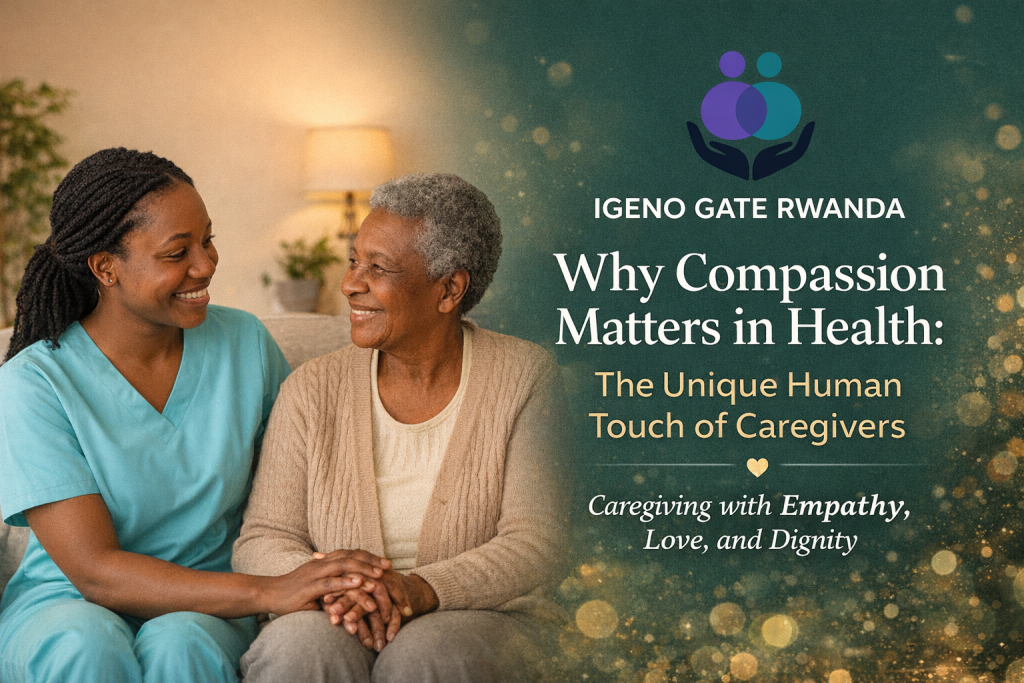
The Unique Human Touch of Caregivers
In today’s rapidly advancing healthcare environment, technology, medication, and clinical expertise play an essential role in saving lives and managing illness. However, one critical element of quality healthcare often cannot be replaced or automated: compassion.
At Igeno Gate Rwanda, we believe that true caregiving goes beyond medical tasks. It is a deeply human service built on empathy, love, patience, and presence. Compassion is not an optional extra in caregiving; it is the foundation upon which meaningful care is delivered—especially for the elderly, people living with chronic illness, disability, or those recovering at home.
Understanding Compassion in Healthcare
Compassion in healthcare is the ability to recognize another person’s suffering, understand it emotionally, and respond with genuine care and kindness. It means seeing the patient not as a condition or diagnosis, but as a whole human being with emotions, fears, memories, and dignity.
For caregivers, compassion shows itself through:
-
Listening without rushing
-
Speaking with kindness and reassurance
-
Being emotionally present, not just physically available
-
Treating each person with respect, regardless of age or condition
This human connection creates trust, comfort, and emotional safety—elements that are just as important as medical treatment itself.
Why Compassion Is Essential in Caregiving
1. Compassion Improves Health Outcomes
Research and real-life experience consistently show that patients who feel cared for emotionally often experience:
-
Reduced stress and anxiety
-
Better cooperation with treatment plans
-
Improved recovery and quality of life
When caregivers approach their work with empathy, patients feel understood and supported, which positively affects both mental and physical health.
2. Compassion Preserves Dignity, Especially for the Elderly
Aging, illness, or disability can make individuals feel vulnerable or dependent. Compassionate caregiving restores dignity by:
-
Respecting personal routines and preferences
-
Communicating clearly and patiently
-
Involving individuals in decisions about their care
At Igeno Gate Rwanda, we emphasize caregiving that honors the life history, values, and independence of each person we serve.
3. The Emotional Presence That Families Cannot Always Provide
Families deeply love their parents and relatives, but modern life often makes full-time caregiving difficult. Professional caregivers step in not to replace family love, but to extend it.
A compassionate caregiver:
-
Becomes a trusted companion
-
Offers emotional support during loneliness or fear
-
Provides reassurance when family members are away
This emotional presence helps both the care recipient and their family feel at peace.
The Unique Human Touch of Caregivers
Caregivers are often present during the most intimate moments of a person’s life—bathing, feeding, medication support, mobility assistance, and end-of-life care. These moments require more than technical skill; they require heart.
The human touch of a caregiver includes:
-
A calm voice that reassures
-
A gentle hand that provides comfort
-
Patience when communication is slow
-
Empathy when pain or confusion arises
This human connection cannot be replaced by machines, apps, or systems. It is deeply personal and profoundly impactful.
Compassion at the Core of Igeno Gate Rwanda
At Igeno Gate Rwanda, compassion is not just a value—it is a standard. We carefully select and train caregivers who demonstrate:
-
Emotional intelligence and empathy
-
Respect for cultural and family values
-
Commitment to ethical, patient-centered care
Our caregivers are trained to understand that caregiving is not only about what they do, but how they do it.
We focus on:
-
Holistic, home-based care
-
Supporting both physical and emotional well-being
-
Building trust with families and communities
-
Providing care that feels human, not institutional
Caregiving as an Act of Love and Responsibility
Caregiving is often described as a profession, but at its core, it is also an act of love and social responsibility. It reflects who we are as a society and how we treat our most vulnerable members.
By choosing compassionate caregiving, we affirm that:
-
Every life has value
-
Every person deserves dignity
-
Healing involves both the body and the heart
Looking Forward: Building a More Compassionate Health System
As Rwanda continues to strengthen its healthcare system, compassionate caregiving will remain essential—especially in home-based and community care.
At Igeno Gate Rwanda, we remain committed to:
-
Promoting compassionate caregiving practices
-
Educating families on the importance of emotional care
-
Supporting caregivers in their vital role
-
Building a healthcare culture centered on humanity
Final Thoughts
Compassion is not a weakness in healthcare—it is a strength. It is what transforms care from a service into a relationship, and treatment into healing.
At Igeno Gate Rwanda, we are proud to stand for caregiving that is human-centered, empathetic, and rooted in love—because health is not only about living longer, but about living with dignity, comfort, and connection.